Why Sleep Can Change So Much During Perimenopause
One of the most common things women mention in clinic during perimenopause is that their sleep has changed.
Sometimes it becomes harder to fall asleep. For others, sleep becomes lighter and more restless. Some women begin waking several times through the night, perhaps from heat or a hot flash, and then find it difficult to fall back asleep.
In classical Chinese medicine, the ability to shift from an active state into a resting state depends on Yang being able to descend. Yang is associated with mental activity, warmth, movement and Fire. At night, it needs to move downward into the deeper recesses of the body, where it is stored within Water, which is the ultimate Yin.
This is the restorative part of the cycle, when the body and mind are able to rest, repair and rejuvenate.
Sleep Requires a Downward Shift
During the day, Yang is active and outward. It gives us warmth, movement and the ability to engage in the world through blood flow and activity.
At night, that movement changes direction.
Fire, as an expression of Yang, needs to descend through the body and eventually be stored within Water.
When this happens well, the body settles and sleep comes more easily.
When Yang is weak, it is more likely to float upward rather than descend into darkness. This can show up as difficulty falling asleep, restless sleep, multiple wakings, waking from heat, or difficulty falling back asleep after waking.
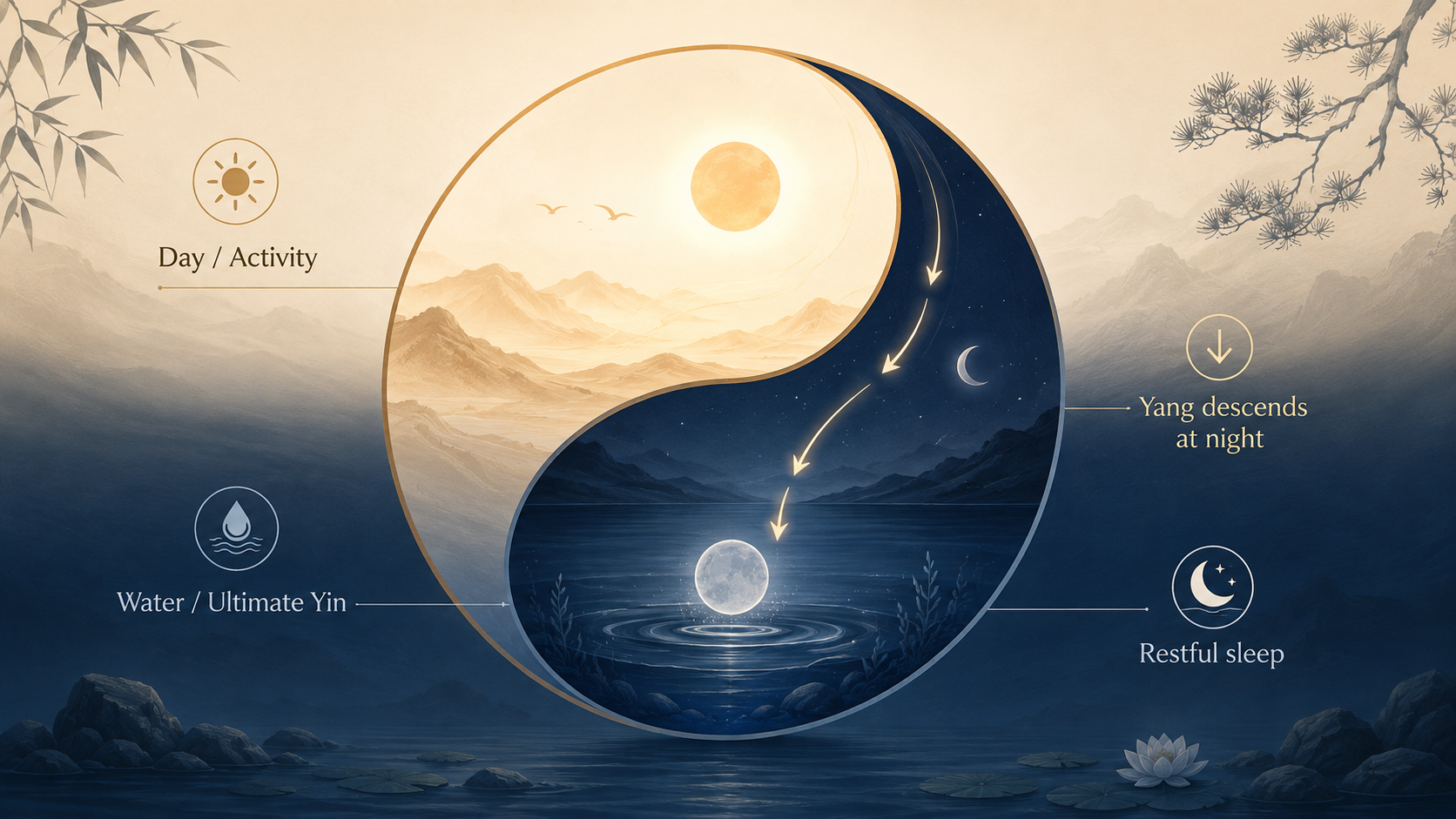
At night Yang descends into Yin for rest and rejuvenation.
Why Yang Can Become Weaker
Yang naturally becomes less robust as we age. But age is not the only thing that influences it.
Years of pushing hard without adequate rest, recovery or nourishment can also weaken Yang.
For women, there is another important piece: blood.
Throughout the menstrual years, the body is continually engaged in the cycle of building, storing and releasing menstrual blood. As we move toward menopause, that menstrual cycle gradually comes to an end.
This is part of the normal transition, but it requires the system to adapt to a very different relationship with blood than it has had throughout the menstrual years.
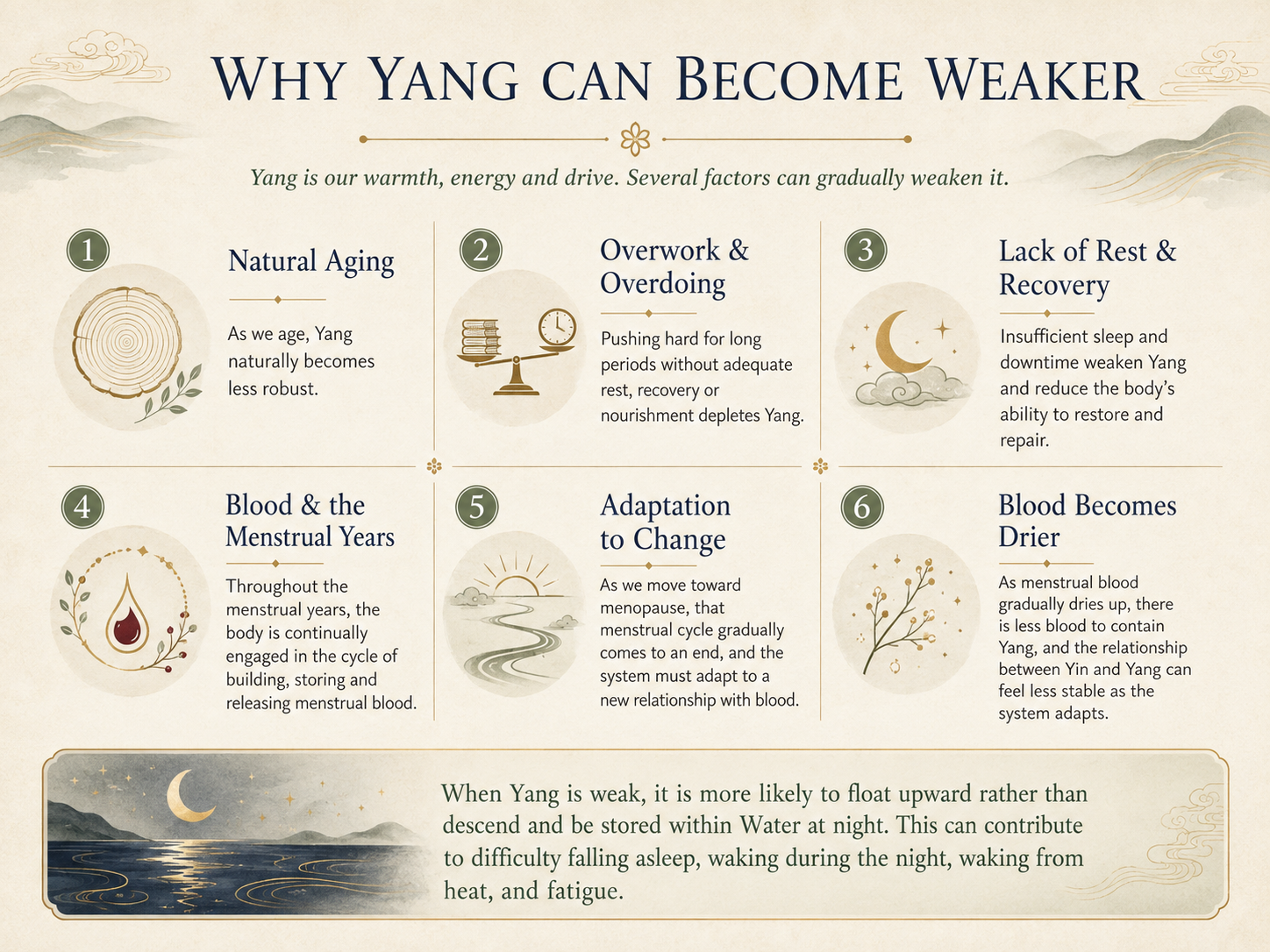
Some of the ways vitality is depleted over time.
Why Perimenopause Can Affect Sleep So Strongly
Perimenopause does not change the basic physiology of the body. The same movements and relationships are still there.
What changes is that menstrual blood is gradually drying up, which means the system is having to make a major adaptation from the way it operated during the menstrual years.
The Liver stores blood, so as menstrual blood becomes drier and less abundant, Liver blood also becomes drier and less nourishing. In clinic, this can show up particularly as waking during the night and then having difficulty falling back asleep.
As blood becomes drier and less abundant, there is less blood to contain Yang. The relationship between Yin and Yang can therefore feel less stable as the system adapts.
At the same time, Yang may be weaker and more likely to float upward rather than descend deeply into Water at night.
This can leave the body tired while the upper part of the system, including the mind and Heart, still feels active or unsettled.
What This Can Feel Like
In clinic, women may describe some combination of:
Difficulty falling asleep
Restless or light sleep
Multiple wakings
Waking during the night and struggling to fall back asleep
Feeling hot at night
Waking from a hot flash
Night sweats
Anxiety or restlessness
Feeling tired while the mind still feels active
Waking without feeling properly rested
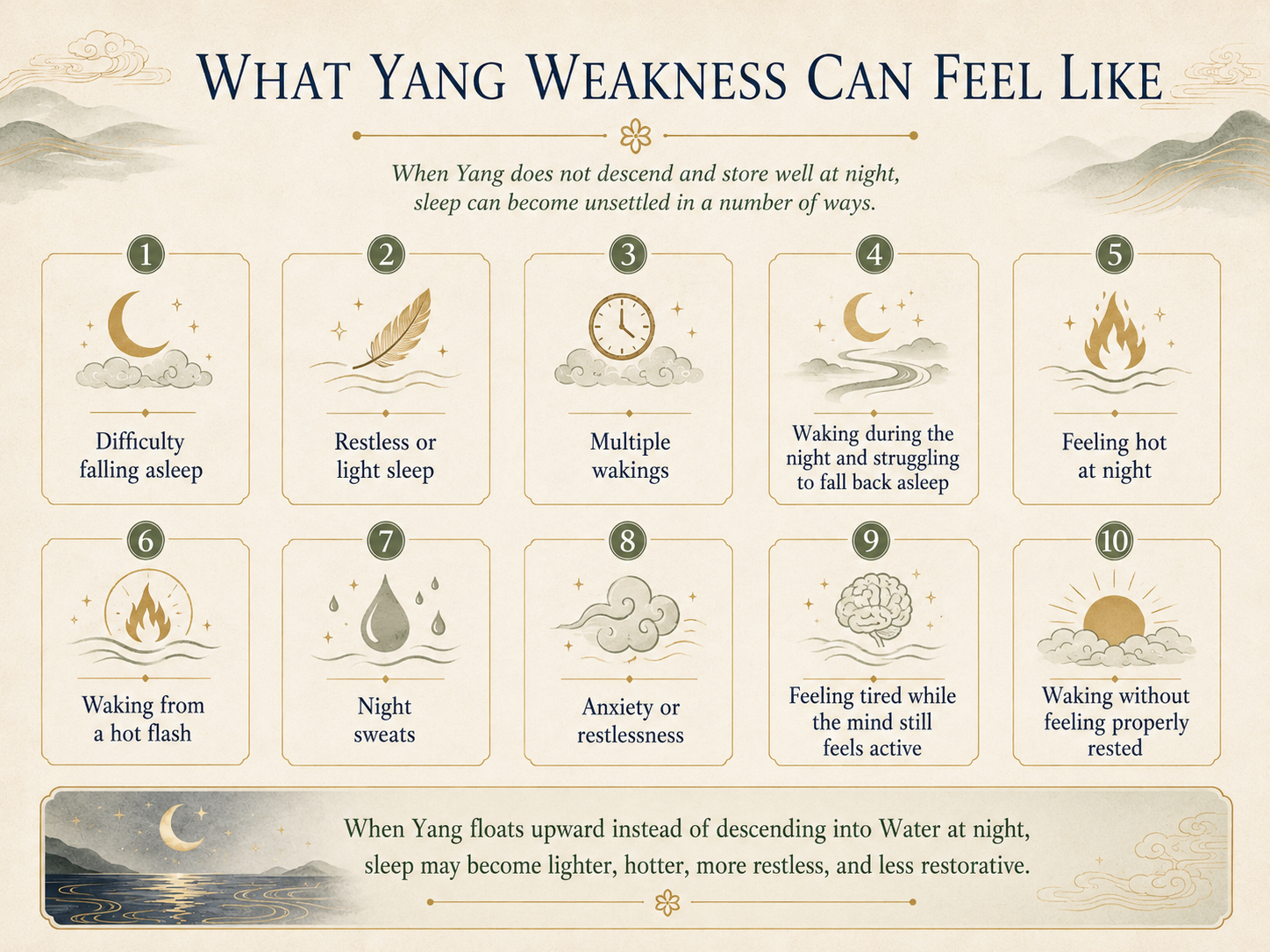
Weak Yang Floats and gives rise to more heat, anxiety and restlessness at night.
The Heart, Fire and Sleep
In classical Chinese medicine, Yang/Fire is related to the Heart organ.
The Heart is closely connected with consciousness, awareness, and our ability to feel mentally settled.
When Fire and Yang are not descending well at night, the upper part of the system can remain more active or unsettled.
This may look like difficulty falling asleep, waking from heat or a hot flash, restless sleep, anxiety, or waking during the night and finding it difficult to settle back into sleep.
Digestion Can Affect Sleep Too
Another pattern we often see in clinic is sleep disruption appearing alongside digestive changes.
A woman may also notice bloating, reflux, nausea, heaviness, or foods that suddenly do not sit as well as they once did.
From a classical Chinese medicine perspective, the centre of the body needs to be functioning well for Yang to descend properly at night.
If the Stomach becomes too dry, there may not be enough tangible moisture and substance to support that downward movement.
But the opposite can also happen.
If too much dampness becomes stuck in the middle, the centre can become heavy and obstructed. Instead of Yang moving smoothly downward, that congestion can interfere with its descent.
So whether the middle is too dry or too damp and stagnant, the result can be similar: Yang does not settle properly into Water at night, and sleep can become lighter, more restless, or more easily interrupted.
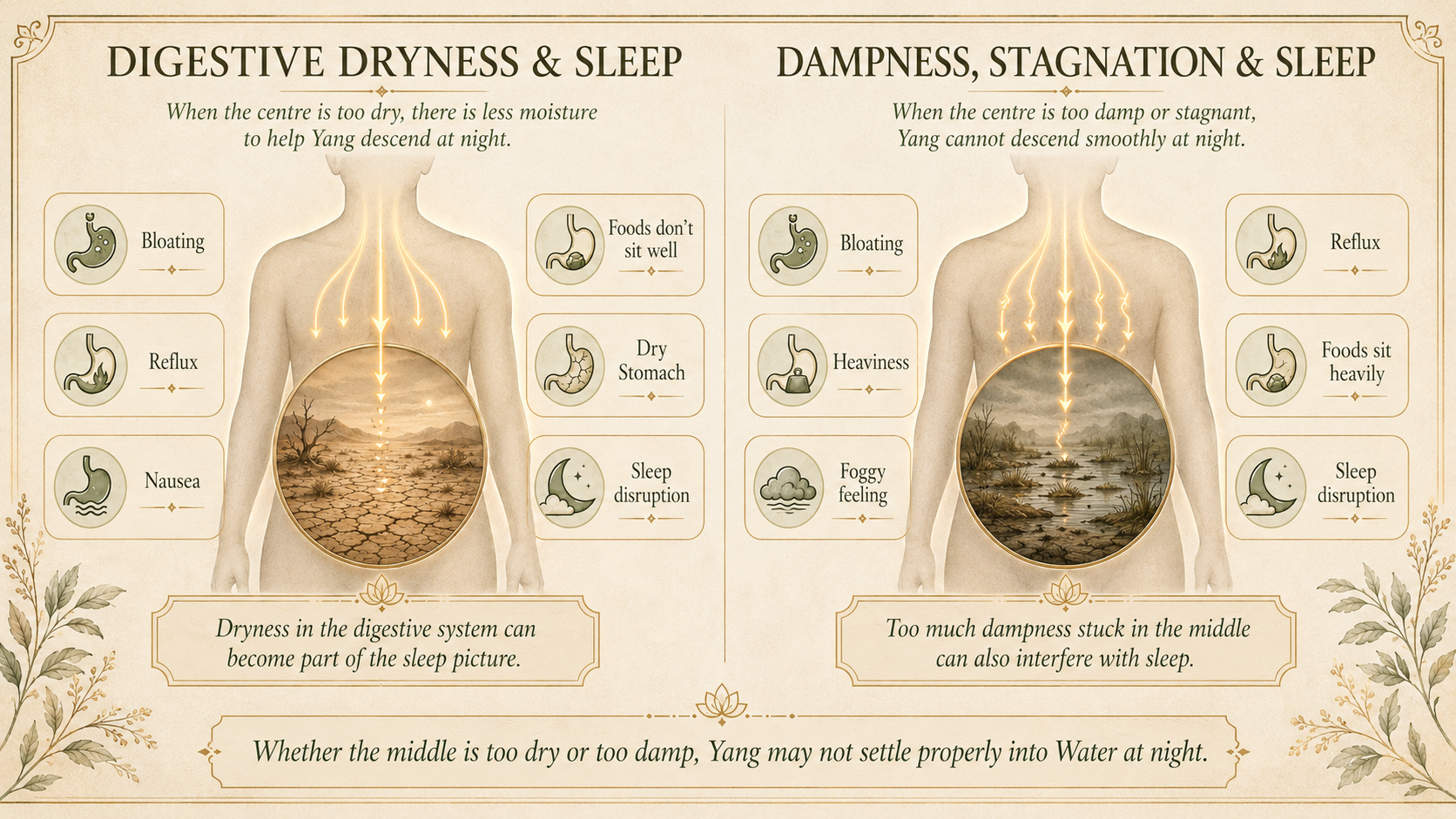
2 of the main ways digestive disharmony can affect sleep during perimenopause.
What We Look at in Clinic
When someone comes in with sleep changes during perimenopause, we look at much more than how many hours she is sleeping.
We also want to know:
Is it hard to fall asleep?
Does she wake frequently?
Once awake, is it difficult to fall back asleep?
Is she waking from heat or hot flashes?
Is there dryness?
Has her digestion changed?
Are her periods becoming lighter, heavier or more irregular?
Is there more anxiety or restlessness?
Has she been pushing herself hard for a long time without enough recovery?
Sleep is often one part of a larger adaptation happening through the system.
Acupuncture and Chinese Herbal Medicine for Perimenopause Sleep Problems in Kelowna
At our Kelowna clinic, we use acupuncture and individualized classical Chinese herbal medicine based on each woman’s particular pattern of sleep disruption.
For one woman, dryness of blood may be a larger part of the picture.
For another, Yang may be weaker and not descending as well.
For someone else, digestion may be contributing.
The aim is to support the body as it adapts through the perimenopausal transition and help restore a more settled rhythm between activity during the day and deeper rest at night. Often this includes nourishing blood in one way or another and making dietary and lifestyle changes.
If changes in sleep are occurring alongside hot flashes, digestive symptoms, anxiety or menstrual changes, we can look at how these pieces fit together and create an individualized treatment plan.