Chinese Herbs for Menopause
With so many herbs for menopause on the market, it can be overwhelming trying to figure out which ones might be right for you. You’re not alone in this, and there are things that can help support you through this transition.
Before we get into specific herbs, it is important to understand that Chinese herbs are a different beast. They cannot be compared directly with Western herbs or viewed through a Western lens. In classical Chinese herbal medicine, herbs are combined into formulas based on the person’s complete presentation. Two women experiencing the same menopausal symptom may therefore require entirely different formulas.
Flavour is also fundamental to how Chinese herbs are understood. Terms such as acrid, bitter, sweet, sour and salty describe more than taste; they help describe how an herb moves and what it does within the body. Its temperature, direction and relationship with the other herbs also matter.
This is why we do not generally use single herbs in classical Chinese medicine. The effect comes from the architecture of the entire formula: which herbs are combined, the role each one plays, and the carefully considered dosages and ratios between them. Changing a dosage or ratio can alter the direction and effect of the whole formula. A list of “herbs for menopause” therefore tells us very little without understanding the complete presentation and how the formula is constructed.
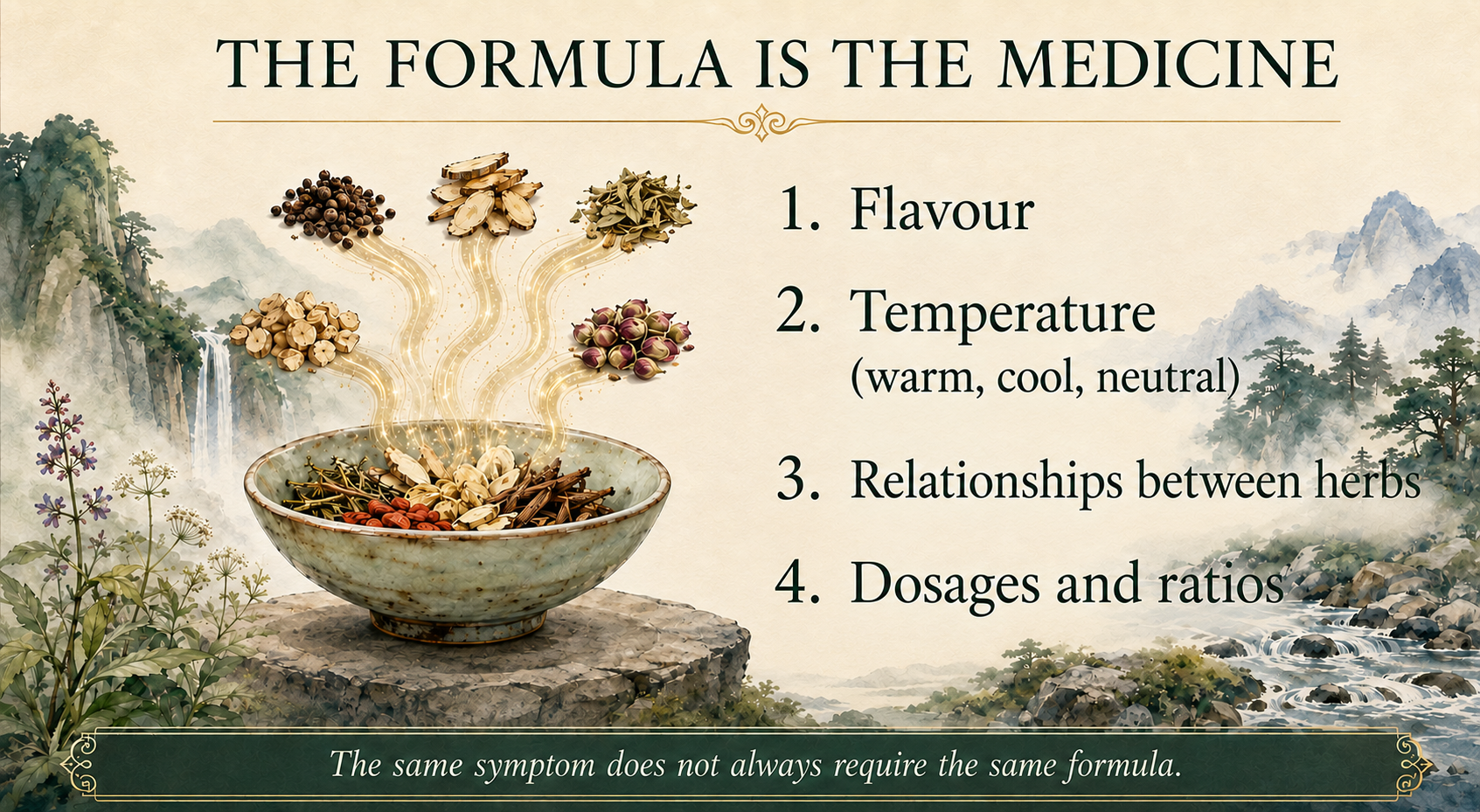
Formulas are carefully constructed blends with their own system of checks and balances. Each herb has a particular role: some lead the treatment, while others support, direct or moderate its effects, protect the centre and help the formula work as a coherent whole.
I have included research on a couple of Chinese herbs commonly associated with menopause, but no herb works in isolation. The herbs discussed here are examples of ingredients that may appear within a larger formula—not stand-alone treatments for menopause. It is important to consult someone properly trained in Chinese herbal medicine before trying them.
Let’s dig into some Chinese herbs for Menopause
Menopause is a natural biological process that marks the end of a woman's reproductive years. However, it can be accompanied by various uncomfortable symptoms, such as hot flashes, night sweats, mood swings, and insomnia. While there are conventional treatments available, many women prefer natural remedies to alleviate their symptoms. Chinese herbs have been used for centuries to treat a wide range of health conditions, and they are gaining popularity as an alternative treatment for menopause. In this blog post, we will explore the benefits of Chinese herbs and Chinese herbal medicine for menopause, specifically Dang Gui (often marketed as Dong Quai) and Sheng Di Huang (Rehmannia).
Dang Gui (Dong Quai): an herb used in Menopause Formulas
Dang Gui, commonly marketed as Dong Quai, is one of the most popular Chinese herbs associated with menstrual and menopausal symptoms. It has been used for centuries within Chinese herbal formulas for presentations involving menstrual irregularities, cramping, and changes in blood and circulation. However, it is not simply a “female ginseng” or an herb used to regulate female hormones. Its purpose depends on the person’s complete presentation and the other herbs included in the formula.
Research on Dang Gui used by itself has not shown it to be more effective than placebo for relieving menopausal symptoms. This highlights an important difference between taking a single herbal supplement and receiving an individualized Chinese herbal formula. Dang Gui is traditionally prescribed as one part of a larger formula rather than as a stand-alone treatment for hot flashes, night sweats or vaginal dryness.
What might a Dang Gui presentation look like?
A Dang Gui presentation is often seen in someone who appears weak or emaciated, with dry skin that lacks lustre and may shed or flake, and there may be a tendency toward abdominal pain. Together, these signs suggest a broader blood-deficiency presentation rather than simply the presence of a menstrual or menopausal symptom.
This does not mean that Dang Gui should be taken by itself whenever these signs appear. Its role depends on the complete presentation, the formula in which it is used, and its dosage and relationship with the other herbs.
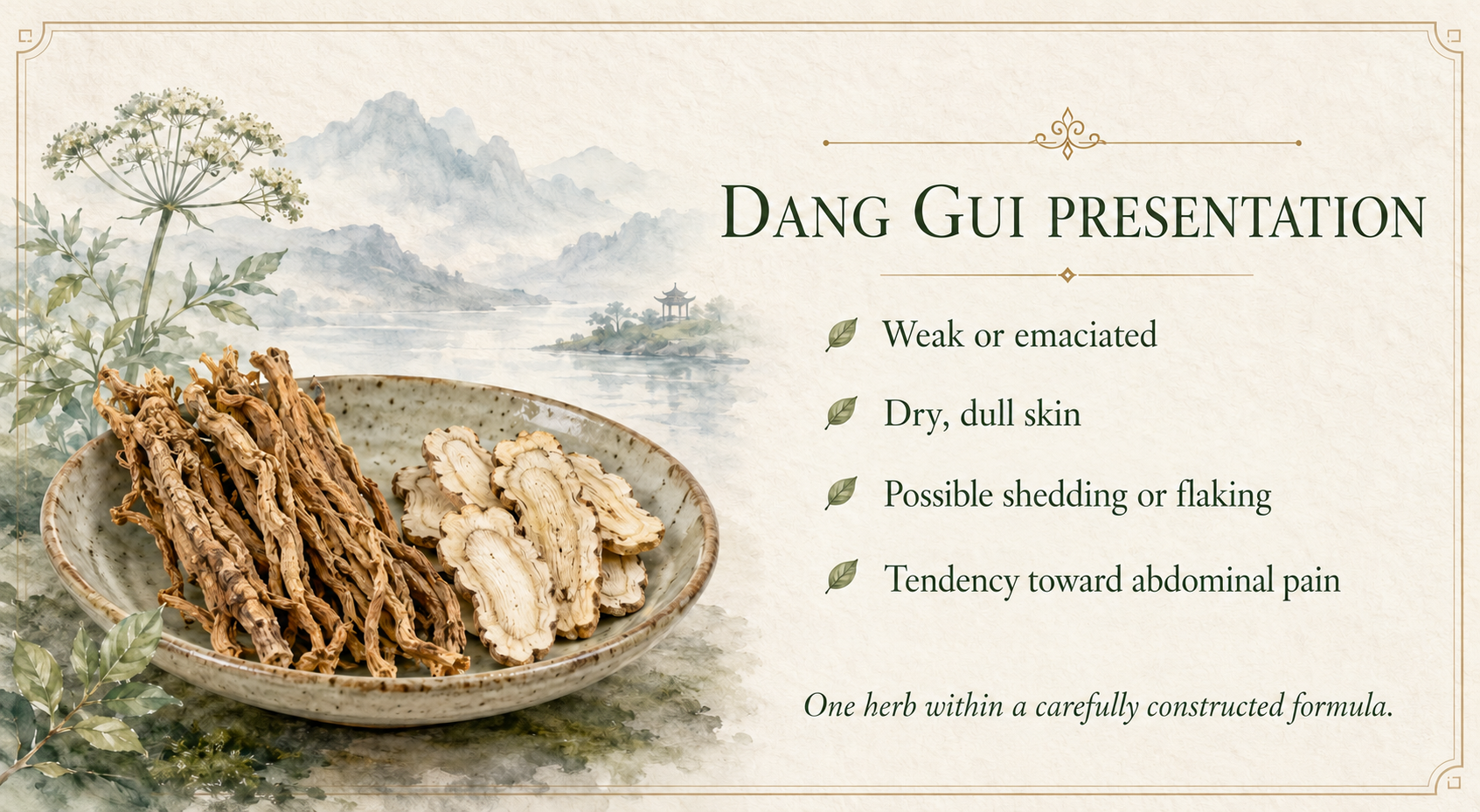
Dang Gui is an important herb in formulas used to support female physiology.
Sheng Di Huang (Rehmannia): an herb used in Menopause Formulas
Sheng Di Huang is the unprepared form of the root of Rehmannia glutinosa. You may have heard it described as an herb for “Yin deficiency,” particularly in relation to hot flashes, dryness, and menopause. In classical Chinese medicine, however, we understand the menopausal transition primarily as a deficiency of blood, not as “Yin deficiency.” A true Yin deficiency is a serious condition that arises from chronic or severe illness and may also occur as someone nears death.
That said, Sheng Di Huang may be included in a formula when the complete presentation involves either a true Yin deficiency or a blood deficiency. Simply becoming drier during menopause does not mean that someone is Yin deficient. In fact, clinically, we often see the opposite: many women become increasingly Yang deficient. Sheng Di Huang has its place, as does Dang Gui and a number of other Chinese herbs that we will explore in later articles.
What might a Sheng Di Huang presentation look like?
A Sheng Di Huang presentation is often seen after significant or repeated blood loss. The person may be thin or emaciated, with dry, withered skin that lacks lustre. These signs help us understand the broader condition in which Sheng Di Huang might have a role; they are much more specific than simply having hot flashes or becoming drier during menopause.
Sheng Di Huang is also a heavy and cloying herb and may be difficult to digest, particularly when digestive function is already weak. This is another reason Chinese herbs are used in carefully constructed formulas. Other herbs may be included to help deliver the intended treatment while “protecting the centre”—supporting the digestive system so that the formula can be properly tolerated and transformed.
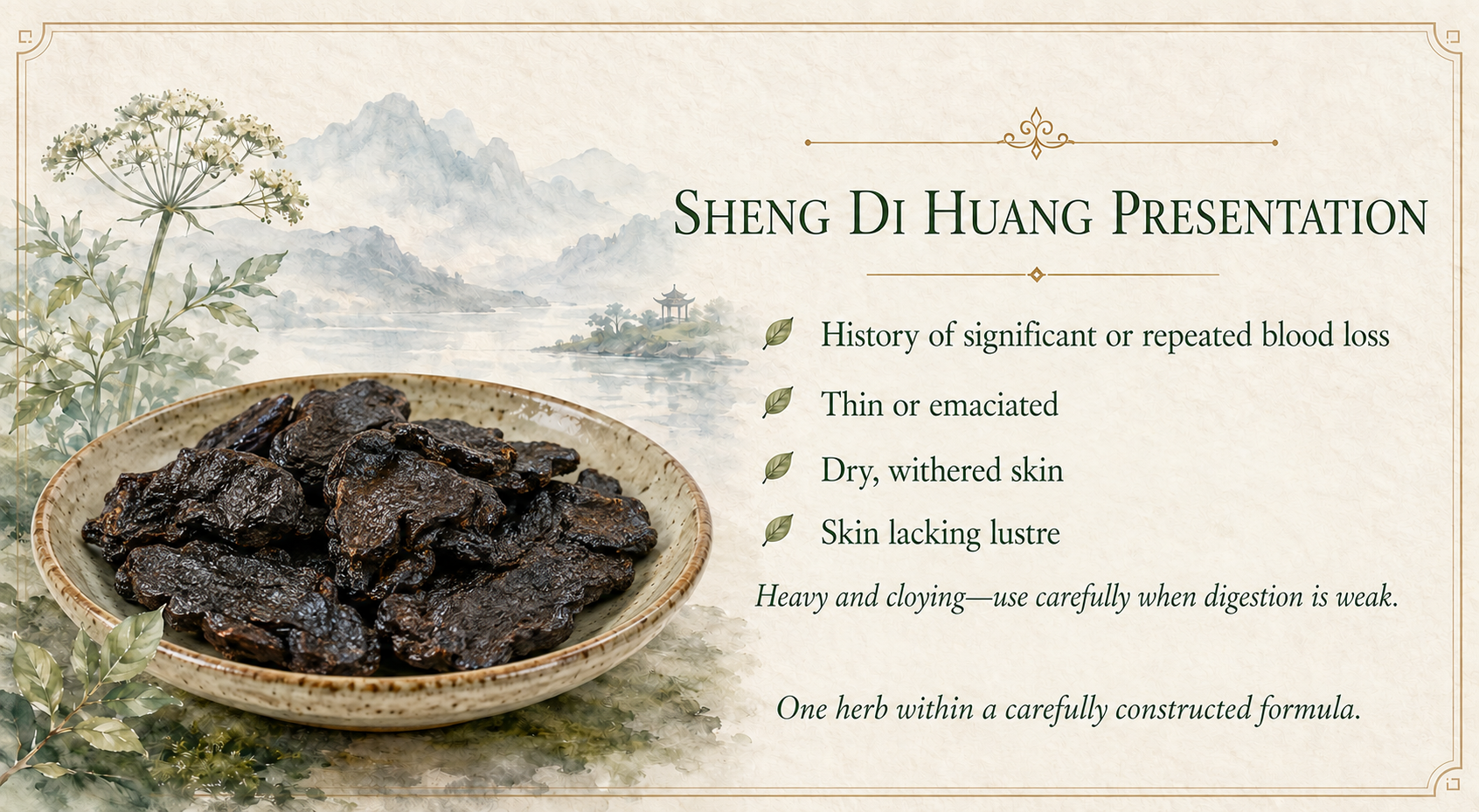
Sheng Di Huang is an important herb when there has been a significant amount of blood loss.
Finding a practitioner who can help you find the right herbs for Menopause and related symptoms
Chinese herbal medicine takes a holistic approach to health and emphasizes the balance and harmony of the body. Chinese herbs are often used in combination with other herbs to create formulas that address the individual needs of the patient. It is important to consult a qualified Chinese herbal practitioner before taking any Chinese herbs to ensure their safety and effectiveness.
Chinese herbs and Chinese herbal medicine may offer support for women moving through menopause, but the formula must be selected according to the individual presentation. Dang Gui and Rehmannia are examples of herbs that may be included within a formula; they are not universal “menopause herbs” and should not be expected to produce the same effect when taken alone. Research into Chinese herbal formulas for menopausal symptoms is continuing, but the quality of the evidence varies, and the individualized nature of classical Chinese herbal medicine can be difficult to capture within conventional study designs. It is essential to consult a properly qualified Chinese herbal practitioner before taking any Chinese herbs.
A quick note on that: when seeking out practitioners, they must have a designation of R.TCMP (Registered Traditional Chinese Medicine Practitioner) or DTCM (Doctor of Traditional Chinese Medicine). If your practitioner has a designation of R.Ac (Registered Acupuncturist) this means they have not done the proper training and passed the required exams to be able to include Chinese Herbal Medicine in their practice. I would also caution against taking Chinese Herbs from a Naturopath as they don’t have adequate TCM training to really understand herbs in this way. Naturopaths are incredible at a lot of things and a huge benefit to so many people. It’s simply a matter of how they were trained to understand Chinese herbs.
If you have questions, please don’t hesitate to reach out to us.