Why Hot Flashes Can Happen Even When You Feel Cold
In clinic, we often see women in perimenopause who feel cold much of the time but are also having hot flashes.
They may have cold hands and feet, feel chilled easily, or describe themselves as someone who generally runs cold. Then suddenly they become intensely hot.
They may wake with a hot flash, throw the blankets off, and shortly afterward feel freezing again.
From a classical Chinese medicine perspective, these two experiences can exist together quite easily.
Hot Flashes Are Not Always About Too Much Heat
To understand this, it helps to first look at Yin and Yang.
Yang is the warming, active force of the body. Yin is the cooler, nourishing and storing aspect. Fire is one expression of Yang, while Water is associated with Yin and the deeper storage of the system.
Functionally, this Fire needs to move downward through the body, where it helps warm and transform the lower system, which is related to the Water element. In this way, Fire is brought downward and stored within Water.
As we age, Yang naturally becomes weaker and this downward movement can become more difficult.
Instead of Fire descending as strongly, some of that warmth can begin to float upward and outward toward the surface.
That can show up as a hot flash.
So although the experience is one of intense heat, the underlying picture is not always simply that there is too much heat in the body.
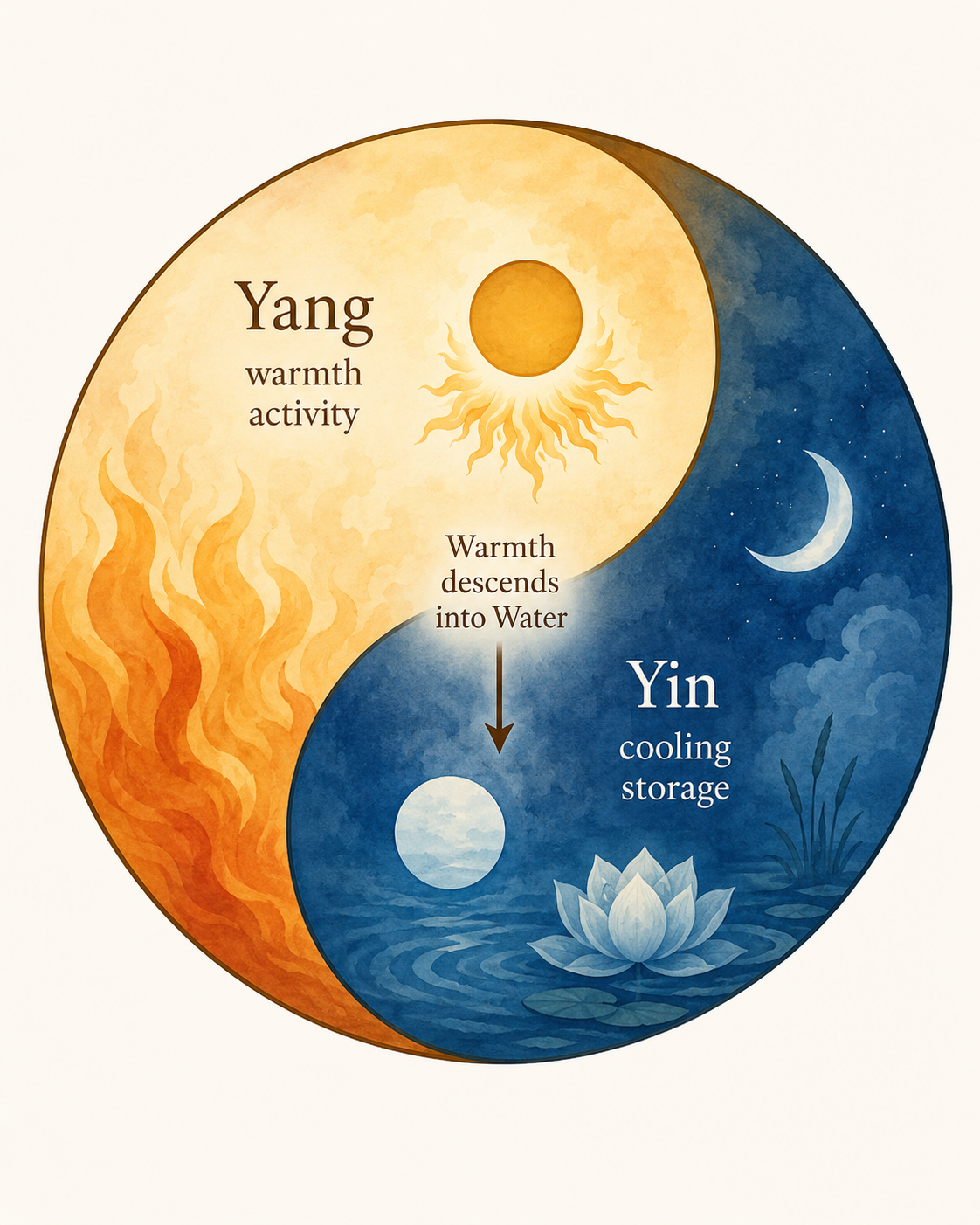
In health, Yang/heat descends into the body - Yin - where it is both stored as vitality and used to warm and distribute fluids around the body.
Why There Can Be Cold Underneath the Hot Flashes
Yang is also the warmth that helps move blood and fluids.
When that warmth weakens, the lower system may grow colder, and blood may become more prone to stagnation.
For women, this has an added relationship with menstrual blood and the uterus.
After years of menstrual cycles, childbirth, blood loss, or trauma to the reproductive organs, blood can become colder and more stagnant in the lower body. Warm blood moves; cold blood stagnates.
So we can have two things happening at the same time:
Cold and stagnation lower in the body
Warmth floating upward toward the surface
This is one way a woman can feel cold much of the time and still experience hot flashes, flushing, or sweating.
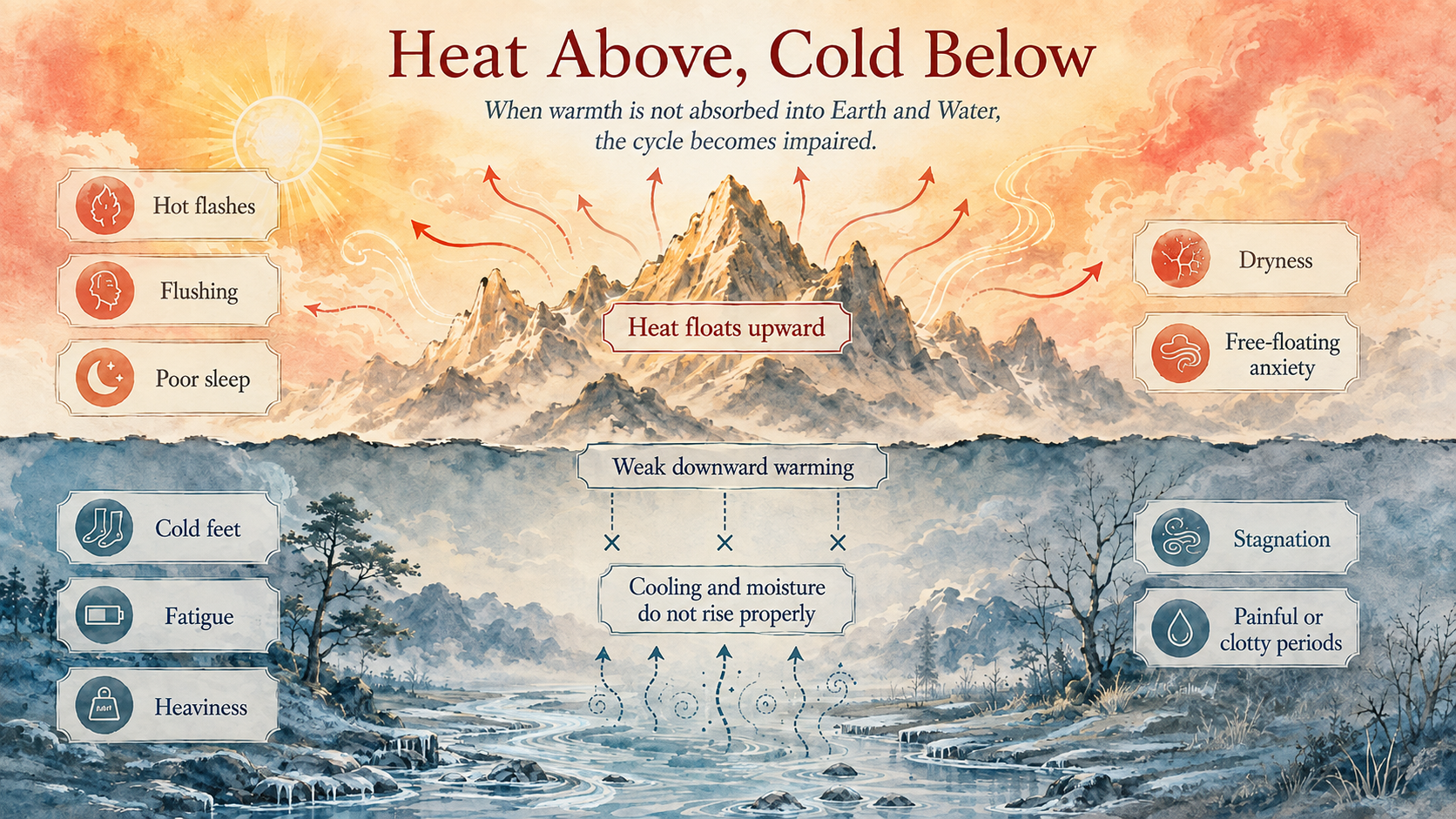
During Perimenopause, blood dries and creates more heat above and cold below.
What This Can Look Like in Clinic
A woman may describe some combination of:
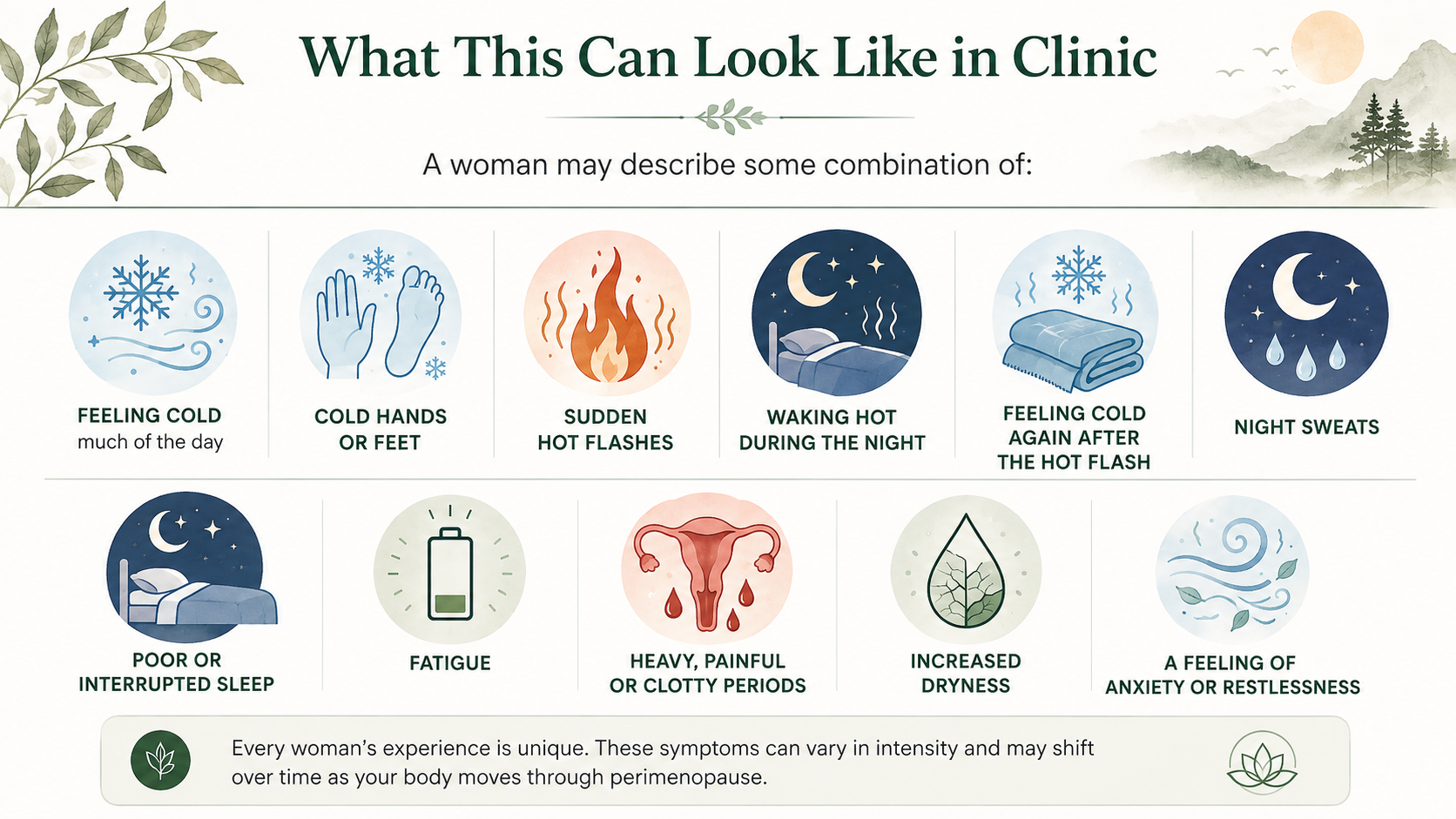
The many symptoms women report during the perimenopausal transition.
Symptoms often vary in intensity, frequency and range.
Feeling cold much of the day
Cold hands or feet
Sudden hot flashes
Waking hot during the night
Feeling cold again after the hot flash
Night sweats
Fatigue
Increased dryness
A feeling of anxiety or restlessness
One woman may have more cold and stagnation. Another may be much drier. Another may have digestive symptoms, headaches, anxiety or insomnia alongside the hot flashes.
Blood Also Changes During Perimenopause
During perimenopause, menstrual blood gradually begins to dry up and becomes more prone to stagnation.
If the blood is not adequately nourished, the normal movement of Water — cooling and moisture — is impaired. When that cooling and moistening function is weaker, we can feel hotter and drier, either on the surface or in the upper regions of the body.
At the same time, Yang may also be more likely to float upward rather than descend as strongly as it once did, leaving some women with that feeling of “free-floating” anxiety.
So there can be cold and stagnation lower in the body while the upper body experiences heat, flushing, dryness, anxiety, or hot flashes.
That is one way we can understand the seemingly contradictory experience of feeling cold and having hot flashes at the same time.
Why the Whole Presentation Matters
We do not look at a hot flash in isolation.
In clinic, we are also paying attention to temperature, sleep, menstrual history, digestion, dryness, pain, anxiety, energy, pulse, and abdominal findings.
Two women may both be having hot flashes and still have very different primary or secondary causes.
Acupuncture & Chinese Herbal Medicine for Hot Flashes in Kelowna
At our Kelowna clinic, we use acupuncture and individualized classical Chinese herbal medicine to support each woman’s particular presentation during perimenopause.
If you are experiencing hot flashes in conjunction with feeling cold, disrupted sleep, dryness, pain, or digestive changes, we can look at the whole presentation and create an individualized treatment plan.