Making Sense Of Chinese Medical Language
Recently, while listening to a podcast featuring a Chinese medicine practitioner, I found myself reflecting on something that has puzzled many people over the years. For those without a background in Chinese medicine, the language in which it is expressed can often feel unfamiliar and difficult to grasp. To some degree, we have to accept that it is not a Western-based paradigm, and therefore, the language will sound foreign. However, there are certain principles that, if clarified, may lend people unfamiliar with Chinese medicine a deeper understanding of this incredible system.
Let’s start with some basic principles.
1) Everything in the universe — and therefore in our bodies — is understood through the relationship of Yin Yang.
Yin and Yang are not actual substances; they are concepts we apply to life and life processes. Yang is warmth, and Yin is cool or cold.
Systems in the body include organ pairs: one yin organ and one yang organ.
These organ systems are more than just organs. They include emotions, tissues, physiological functioning, seasons, elements, and other relationships that help describe how the body operates as a whole.
2) The word Qi is used to describe several things.
Physiologically, Qi can be understood as gas.
Qi is given different names depending on location, which also tells us something about its function. For example, Wei Qi is often translated as defensive qi. Defensive Qi resides on the surface of the body and is a major player in our immune system—its location implies its function.
Qi moves through hollow spaces: hollow organs such as the intestines, bladder, and the interstices.
3) There are six major physiological systems, known by their Chinese names:
Tai Yang (Greater Yang)
Yang Ming (Bright Yang)
Shao Yang (Lesser Yang)
Tai Yin (Greater Yin)
Shao Yin (Lesser Yin)
Jue Yin (Terminal Yin)
These systems help us understand how much Yang is active in the body at any given time, which helps us determine which system may be imbalanced.
As long as there is a heartbeat, yin and yang are present everywhere in the body all the time. What we are usually concerned with clinically is the quantity and movement of Yang within these systems.
Understanding the organ relationships
If we take a closer look at the organs, here are a few important things to understand.
Each element has an organ pair: one yin organ and one yang organ.
A yin organ is a solid organ and contains blood.
A yang organ is hollow and allows for passage of substances such as food or water, as well as gas.
The organ pairs are as follows:
Wood element – Spring season
Liver – Yin organ
Gallbladder – Yang organFire element – Summer season
Heart / Pericardium – Yin organs
Small Intestine / Triple Energizer – Yang organsEarth element – Late Summer
Spleen – Yin organ
Stomach – Yang organMetal element – Fall season
Lung – Yin organ
Large Intestine – Yang organWater element – Winter season
Kidneys – Yin organ
Urinary Bladder – Yang organ
A couple of common language misunderstandings
“Liver Qi Stagnation”
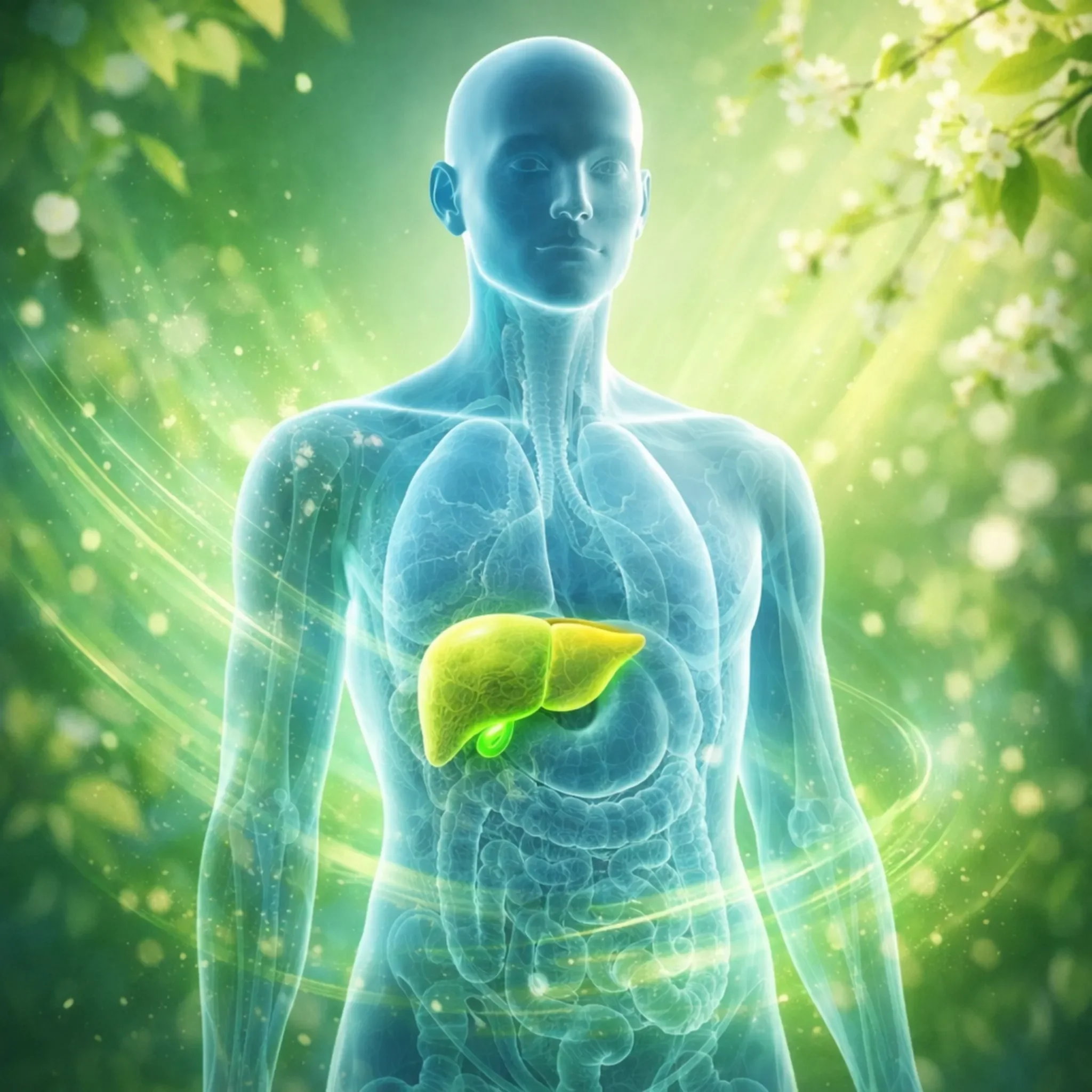
The Liver and Gallbladder are related to spring, digestion & emotional regulation.
If you have ever been to a Chinese medicine practitioner, there is a good chance you have heard this term.
Typical symptoms of so-called Liver Qi stagnation include:
emotional upset
digestive upset
physical distension and discomfort, including bloating
I’d like to challenge the idea that these symptoms are due to the Liver and suggest that many of them are more closely related to the Gallbladder.
One reason has to do with the basic physiology of the organs in Chinese medicine. Solid organs are filled with blood and therefore cannot stagnate. If a solid organ were truly stagnant, we would be dealing with a very serious medical condition. Solid organs can become deficient, meaning they may not function strongly enough due to a lack of blood or moisture, but they very rarely become stagnant. Hollow organs, on the other hand, are designed for movement and passage. They fill and empty, and because of this, they are capable of stagnation. This is why the Gallbladder system often makes physiological sense in situations commonly described as Liver Qi stagnation.
Examples of Gall Bladder Pathology
Hollow organs fill and empty, meaning they are the organs of passage for what we ingest: food, water, air, etc.
Let's look at these “Liver Qi” symptoms in the context of the Gall Bladder.
Nausea may occur because bile, stored in and released from the gallbladder, is not helping the contents of the stomach move down. Bile not moving properly can create a backup, leading to acid reflux or a bitter taste in the mouth.
A feeling of distension is often due to Qi stagnating. Translation - gases are not moving properly. The best example of this is bloating, which often happens because air/gas is trapped in the intestines.
These Symptoms are not occurring because of the Liver. In pathology, the Liver will show up as symptoms related to blood ie., i.e., pain, menstrual irregularities, pain syndromes such as sciatica or migraines.
Emotional Regulation and the idea that emotions are “stored” in the body.
I believe what people usually mean when they say emotions are “stored in the body” is something a little different from how it’s often presented. One way we might understand it is that stagnant body fluids—especially blood—may carry the imprint of a past psychic or emotional event that feels unresolved. Sometimes this shows up around an old injury or an area of chronic tension.
More often, what we’re dealing with is blood that isn’t moving the way healthy blood should. When circulation slows or becomes obstructed, it can hold the residue of past experiences in a way that feels psychologically “stuck.” Within this framework, blood is closely tied to consciousness, which opens the door to a much bigger discussion for another day.
It might be helpful to understand this idea as a progression:
Qi and Blood stagnate upon mental, emotional, or physical injury
→ causing the system to try to repair the injury
→ causing tissues to become more dense and impair the proper movement of fluids
→ disrupting some part of the system
→ which eventually gives rise to more difficult processing or overwhelming feelings of a particular nature
The Liver “Stores” Anger
This framing may be slightly misleading. It’s not that anger is stored in the Liver, it’s that anger affects the Liver and vice versa. An overabundance of anger such as living in an angry state beyond what one might call a normal response, can affect the way the Liver and Gallbladder function, physiologically. And vice versa, if there is a propensity to Liver/Gallbladder issues physically this can give rise to a propensity toward anger, in excess or as a habitual response to life.
Spring, seasonal change, and the idea of cleansing

The last thing I want to mention, since it is spring and the wellness world is going to start talking about detoxing and doing your spring liver cleanse, is this:
As we move through seasons, we are tracking the quantity of Yang in the environment. You can think of Yang as the sun (warmth). If we go back to those six different phases of physiology, we are currently coming out of Jue Yin season and heading into Shao Yang.
Jue Yin is terminal yin, meaning yin - darkness - is closing so that yang - warmth and daylight - can be born. When Yang is born, it is in its smallest state. Hence, we are in Shao Yang.
Jue Yin relates to the Liver.
Shao Yang relates to the Gallbladder.
As mentioned, the Liver and Gall Bladder make up the Wood element and relate to spring. Wood is associated with wind as a climactic factor. When there is a particularly windy spring, Gall Bladder or Shao Yang symptoms can arise, such as:
Headaches
Vertigo
Muscle Twitches
You can help yourself by keeping wind off your body, and in particular wrapping up your neck. The Gall Bladder meridian runs along the traps and up the back side of the neck to the head. Be cautious not to expose that area too much if you are prone to these types of symptoms.
Liver or Jue Yin Symptoms that commonly show up are:
Pain - as mentioned earlier, this can be anything from sciatica to migraines
Spring Cleansing
Things you can do to help your body’s natural ability to move stagnation are:
Exercise
Hydrate
Eat foods that are slightly bitter in nature, such as greens
Eat 2-3 cups of broccoli sprouts per week.
Ideas to take with Caution
In my first year of school, our principal took our class out to lunch. I asked him, “How do the Chinese eat? What’s the general philosophy?” I’ll never forget the puzzled look on his face; to him, it was an odd question. He said, “Not too little, not too much, just enough.” Those 8 words are words to live by. That goes for food and medicine.
Be very cautious when taking herbs of a certain nature in high doses. Bitters are probably the ones that are recommended the most as being beneficial for the liver and often touted as the best liver detoxers. However, in excess, it will dry the blood and make the digestive system as a whole too cold. Bitters should not be consumed every day as a supplement, and especially not if you don’t have digestive symptoms such as gas, upper bloating, indigestion, reflux, etc. Getting them through your food is the way to go to preserve digestive fire.
Most people don’t need to force detoxification; they just need to support their body’s natural ability to do so. This is particularly the case with women who already have a tendency toward blood deficiencies. Everything happens in its own time. Supporting your body according to the seasons is one way to keep yourself healthy and strong in the days, months, and years to come.