5 Acupuncture Points That Will Support You In The Winter
Each organ system is associated with a specific season.
Winter is associated with the Kidneys & Urinary Bladder
Spring is associated with the Liver & Gallbladder
Summer is associated with the Heart & Small Intestine
Late summer (August/September) is associated with the Spleen/Pancreas & Stomach
Autumn is associated with the Lungs & Large Intestine
Qi (energy) and Blood circulate continuously, yet each season places different demands on the body; in winter, certain systems are called to work harder, and underlying weaknesses are more likely to reveal themselves. Winter is associated with the Kidneys, the Water element, and the climatic factor of Cold. It is the time of greatest storage in the year, as energy draws inward and there is less light and warmth to support the free movement of Qi and Blood.
Supporting yourself and your Kidneys in the Winter
There are a few things you can do to support yourself and your Kidneys in this season. I go into greater detail about specific foods to eat and healthy lifestyle choices to make during the winter months in this blog. The main things are adequate rest, not overextending yourself or being too busy, and eating warming, nourishing foods like soups and roasts.
Acupuncture points to support your body
You can stimulate these points either with some light acupressure or with essential oils such as Black Spruce, Cinnamon, or Rosemary.
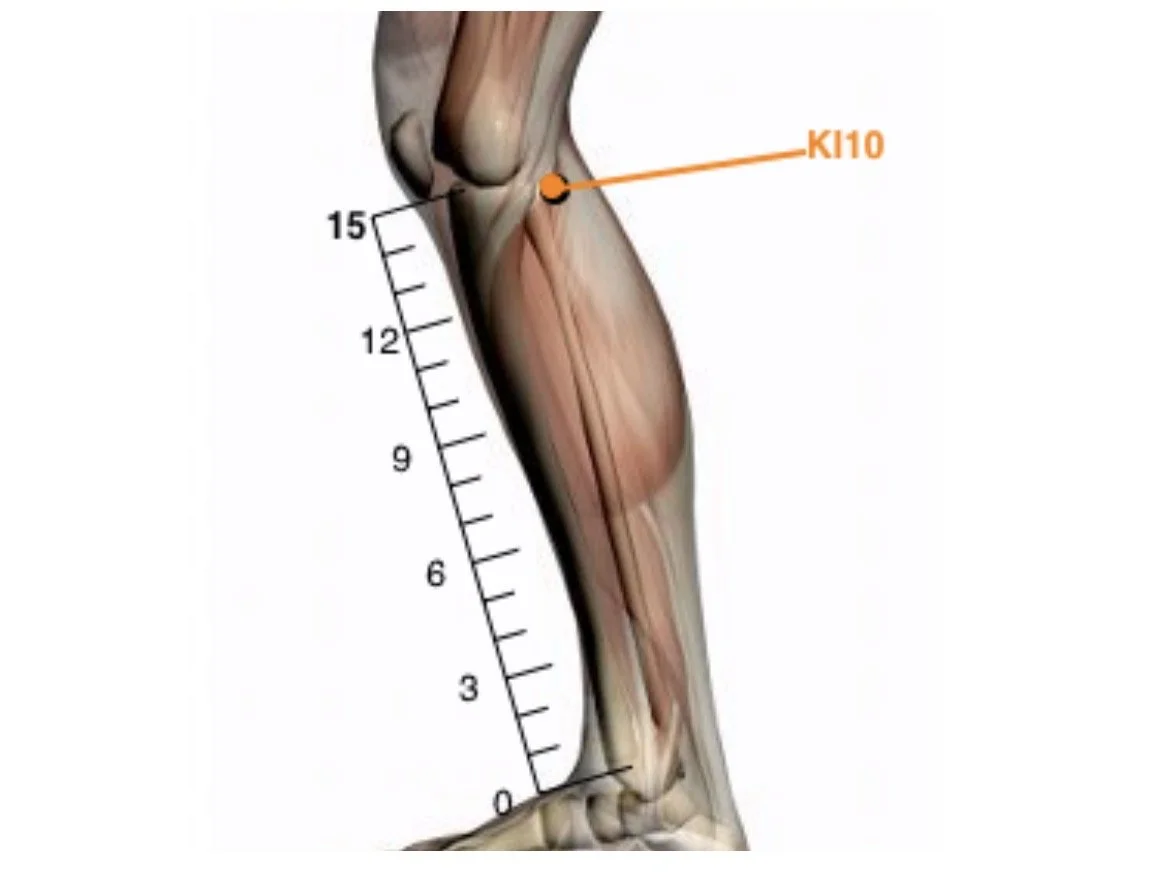
Kidney 10 (Yīn Gǔ - Yin Valley)
Location - with the knee slightly bent, this point is between the 2 tendons on the medial side of the popliteal crease. Medial means the position closer to the midline of the body.
The water point on the water meridian. All meridians have an elemental point. Stimulating the water point on the water meridian during water season is a great way to bring nourishment to the Kidneys.
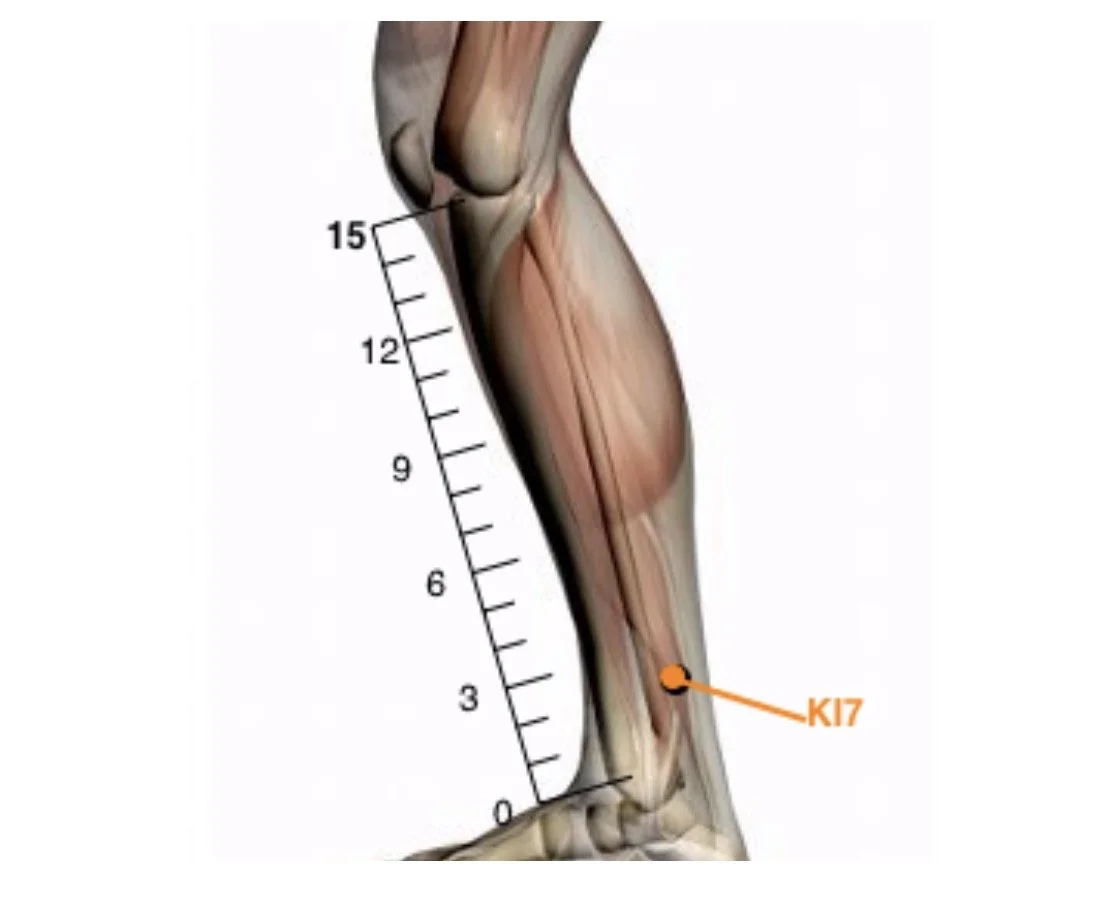
2. Kidney 7 (Fù Liū - Recovery Flow)
Location - roughly 2 inches above the midpoint between the medial malleolus (inside ankle bone) and the Achilles tendon.
The metal point on the water meridian. This blog gives a simple explanation of how the elements are related to one another. Metal is the mother of water; it nourishes water directly.
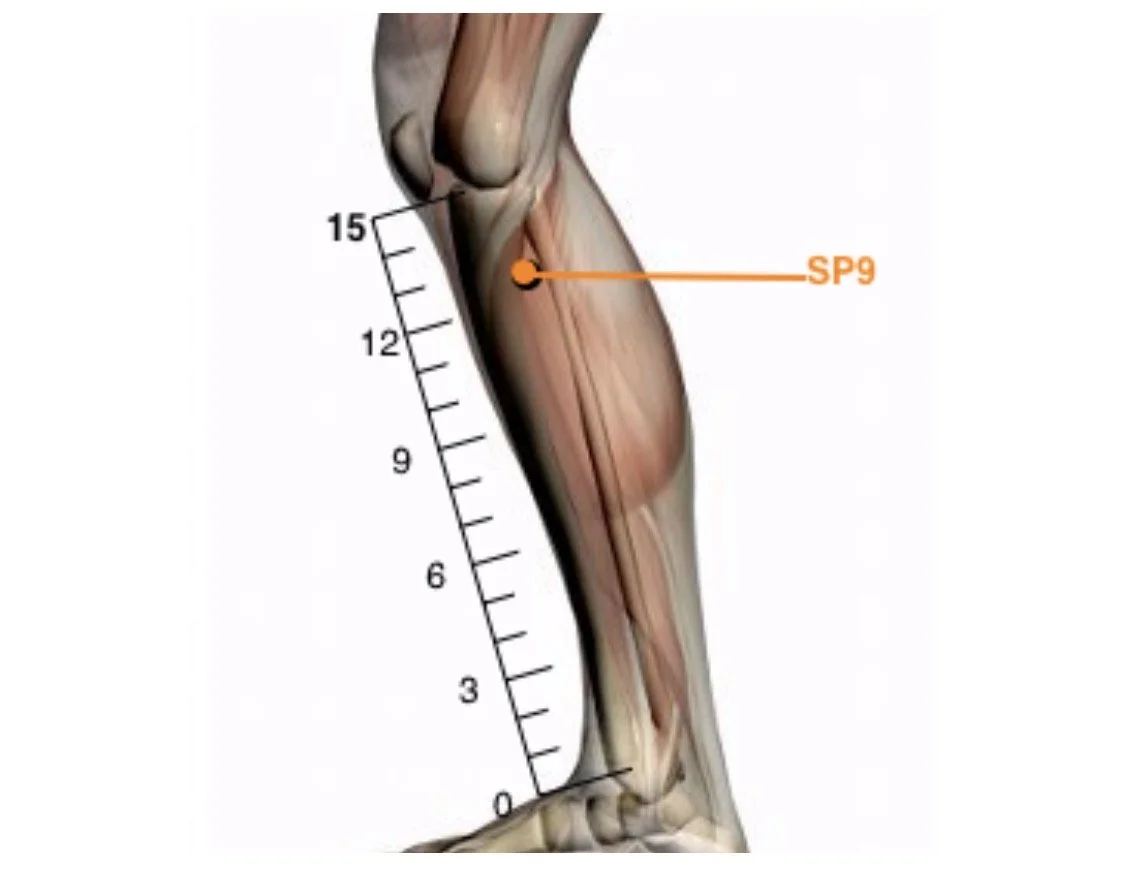
3. Spleen 9 (Yīn Líng Quán - Yin Mound Spring)
Location - On the lower border of the medial condyle of the tibia (tibia is the bone on the inside of your lower leg, the condyle is the ‘bony head’ of the bone near the knee. It is anterior (in front) and inferior (lower) to Kidney 10
This is the water point on the earth meridian. Earth ‘controls’ water. One of the manifestations of a Kidney deficiency is an inability to properly metabolize water in the system, which can show up in a number of ways. Tonifying the water point on the earth meridian helps ‘bank’ excess water from weak kidneys and helps support their normal function.
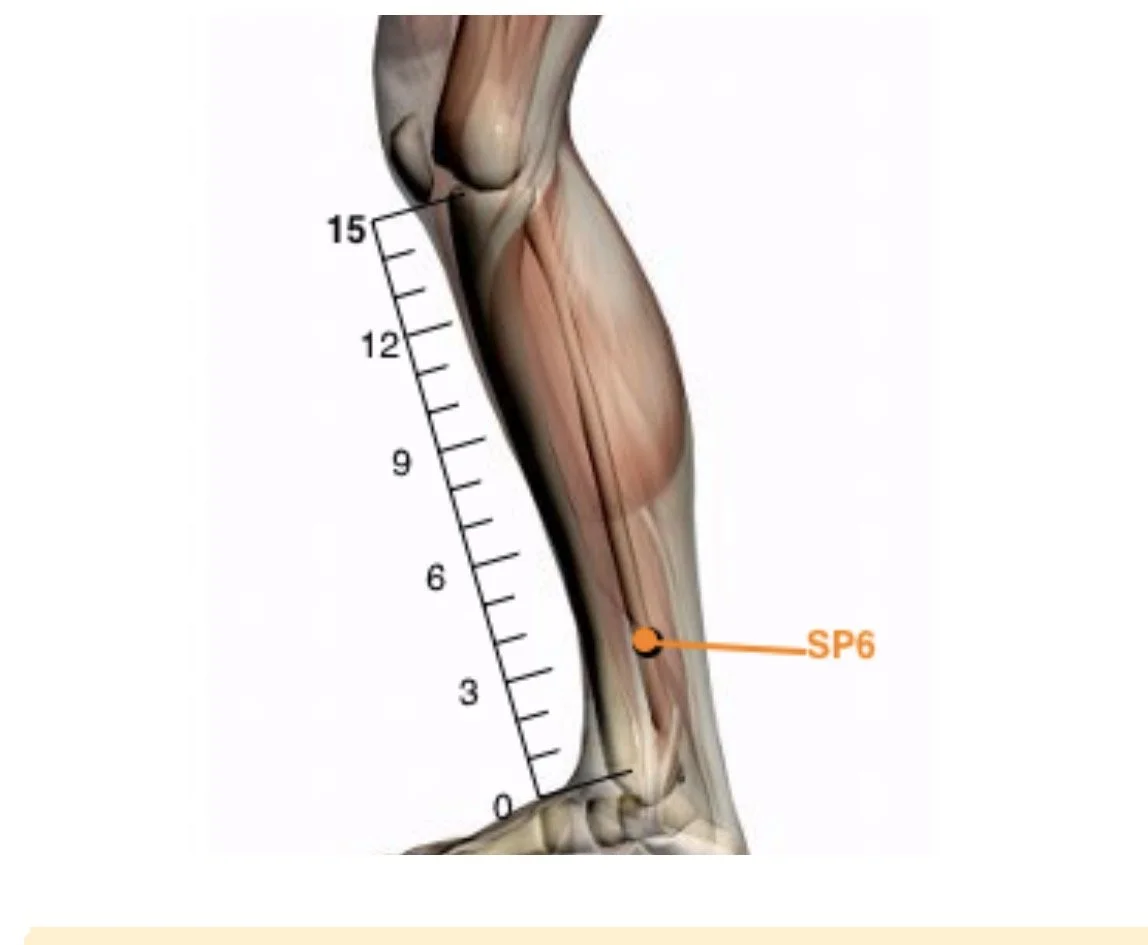
4. Spleen 6 (Sān Yīn Jiāo - Three Yin Intersection)
Location - 3 inches above the medial malleolus (inner ankle bone) on the just posterior (back) to the border of the tibia.
Spleen 6 is the meeting point of the three Foot Yin channels—Liver, Spleen, and Kidney—and supports the nourishment and coordination of these Yin systems in the lower body.
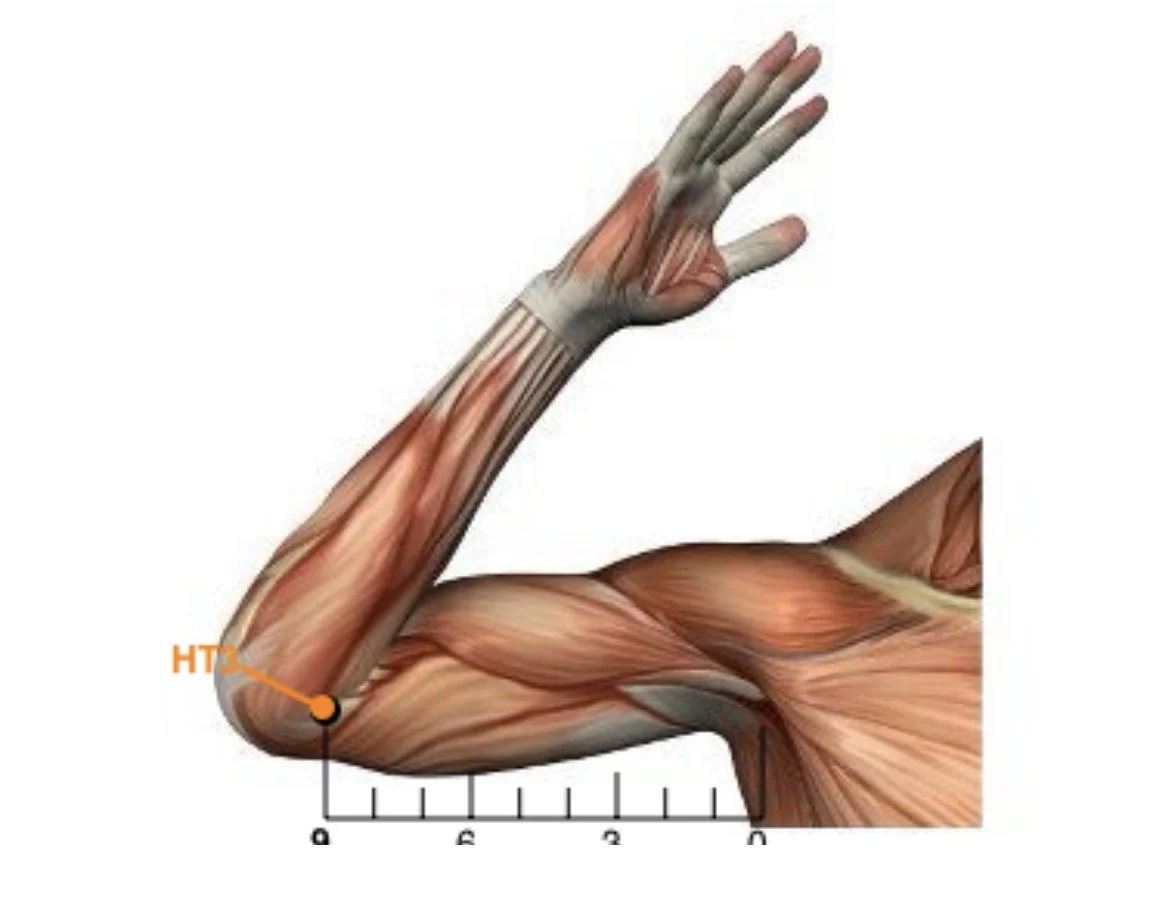
5. Heart 3 (Shào Hǎi - Small Sea)
Location - Medial end of the elbow crease when the elbow is flexed.
By nourishing the Water point of the Heart channel, Heart 3 supports the Shao Yin axis that links Heart and Kidney, helping these systems regulate and balance one another in winter.
Stimulate the points that are tender; this means they could use a little help.
Enjoy:)